

Fostering young minds: Cognitive development in early childhood
Understanding how infants and toddlers think, learn, and make sense of their world is crucial for effective early childhood education. This page provides insights and practical guidance to support cognitive growth through engaging and responsive interactions.
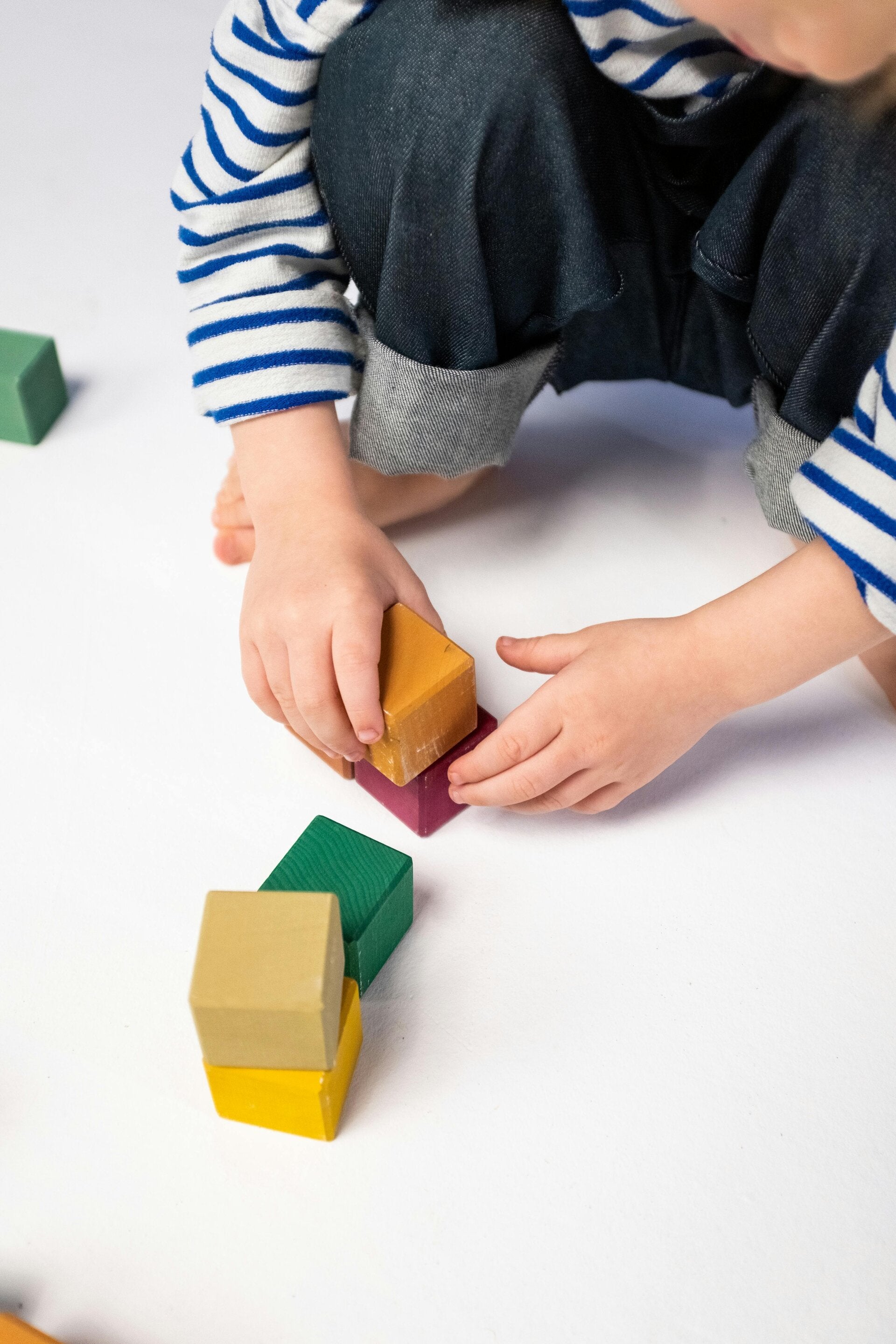
Supporting cognitive development in early childhood
Cognitive development encompasses how babies and toddlers think, learn, remember, solve problems, and understand the world around them. Educators play a vital role in fostering this development through play, exploration, and responsive interactions that promote curiosity and discovery (Harding, 2023). Carefully planned questions, teaching children in stages, and fostering appropriate experiences and opportunities for children to think further are key (Pendergast & Garvis, 2023). The EYLF V2.0 acknowledges that children are confident learners, developing their knowledge through play and relationships (Australian Government Department of Education, 2022).

Key teaching competencies and skills
Effective support for cognitive development relies on specific teaching competencies. Here's how different approaches foster learning:
- Observation: Knowing about children's interests allows educators to plan for meaningful learning experiences.
- Intentional teaching: Go beyond just thinking by asking questions and providing clear guidance to deepen understanding.
- Responsive interactions: Promote curiosity through engaging conversations and shared reading experiences.
- Pedagogy based on play: Encourage problem-solving and exploration by integrating play into learning activities.
- Family partnerships: Support cognitive growth at home through shared reading and learning opportunities with families.

Authentic curriculum provision: Bridging theory and practice
To address common challenges teachers face, an authentic curriculum integrates various learning domains. Here's an example using the book Peek-a Who? by Nina Laden:
- Language & literacy: Read Peek-a Who? and encourage children to make predictions.
- Art: Create simple animal artwork inspired by the book.
- Drama: Act out the animals from the story, encouraging imaginative play.
- Mathematics: Count the animals and recognise colours featured in the book.
- Science: Describe animals and discuss their unique characteristics.
Reading Book( Peek-A-Who?
Engaging learning experiences: Peek-a Who?
This learning experience is designed to stimulate early problem-solving, memory, prediction, and curiosity by engaging children in interactive story reading.
Materials:
- Book: Peek-a Who? by Nina Laden
Learning experience:
The educator reads Peek-a Who? with expression, using pauses and gestures as they turn the pages. Children are encouraged to anticipate who is hiding, point to pictures, name animals, and repeat familiar words. Simple questions are asked by the educator, who responds positively to children's ideas, which facilitates thinking and communication.
EYLF links:
- Outcome 4: Children are confident and involved learners.
- Outcome 5: Children are effective communicators.

learning Outcomes
0–12 Months
Display one page at a time and highlight any animals that are hidden.
Allow the baby to explore the pictures and react by smiling, making sounds or making eye contact.
Repeat animal names and sounds to aid attention and memory.
12–24 Months
Use simple questions like "Who is hiding?" or "Can you find the cat?
Help toddlers point, name animals and mimic animal noises.
Let children flip through the pages and guess what animal will come up next.
2–3 Years
Encourage children to make their guesses as to what the animal might be before flipping to the page.
Invite them to say what color the animal is, what size the animal is, the sound the animal makes and to make comparisons between animals.
Continue learning by inviting children to be their favorite animal and look for matching toy animals to the picture